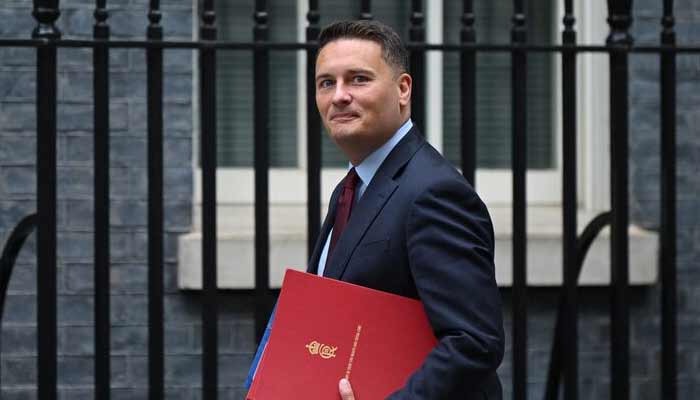
LONDON, May 17 (Alliance News): Former British Health Secretary Wes Streeting has become the first Member of Parliament to publicly confirm his intention to challenge Prime Minister Keir Starmer for the leadership of the ruling Labour Party following his resignation earlier this week.
Streeting, widely regarded as one of Labour’s most effective communicators, announced during a speech on Saturday that he would stand in a “proper contest” to replace Starmer, although formal leadership procedures have not yet been initiated.
In his resignation letter, the 43-year-old politician said he had “lost confidence” in Keir Starmer’s leadership, arguing that the prime minister lacked vision and a clear political direction at a time of mounting challenges for the government.
The announcement has intensified political debate within Labour ranks, where speculation had circulated for months regarding Streeting’s possible leadership ambitions amid Starmer’s prolonged political difficulties.
Known for his polished media presence and outspoken style, Streeting has emerged as a divisive figure within the party. Supporters describe him as an energetic reformer with strong communication skills, while critics accuse him of political opportunism and excessive ambition.
Political analyst Steven Fielding from the University of Nottingham said Streeting possesses a sharp political instinct and a strong ability to communicate with voters, though questions remain about how closely his political views align with the current direction of the Labour Party.
Streeting belongs to the centrist and pro-market wing of Labour and has often been associated with policies linked to former Prime Minister Tony Blair.
Born to teenage parents and raised in a working-class housing complex in East London, Streeting frequently highlights his modest background and personal struggles as part of his political identity.
He has publicly spoken about his family’s difficult past, including his maternal grandmother giving birth in prison and his grandfather’s connections to London’s criminal underworld and the notorious Kray Brothers.
After studying at a state-funded school and later graduating from the University of Cambridge, Streeting entered politics through the centrist Labour think tank Progress, which was established by allies of Tony Blair during the 1990s.
Elected to Parliament in 2015, Streeting openly criticized Labour’s shift toward the left under former party leader Jeremy Corbyn and later joined the shadow cabinet after Keir Starmer became party leader.
As Health Secretary, Streeting gained attention for efforts aimed at reducing hospital appointment waiting lists and addressing problems within England’s National Health Service. However, his tenure also drew criticism due to tensions with sections of the healthcare sector, including striking junior doctors.
Some former Labour advisers argue that although Streeting had the opportunity to emerge as a major public service reformer, he failed to deliver substantial structural changes during his time in office.
Others believe he represents qualities currently lacking within Labour, including a working-class background and an ability to connect with ordinary voters.
According to public opinion surveys, Streeting’s national popularity remains uncertain. A recent YouGov tracker reportedly showed that 30 percent of respondents viewed him negatively, while only 12 percent expressed positive opinions, placing him relatively low among British political figures.
Streeting, who is openly gay and an Anglican Christian, has previously spoken about the challenges of reconciling his faith with his sexuality during earlier stages of his life.
Known for his extroverted personality, he has often attracted attention at Labour Party events for his energetic public appearances and unconventional sense of humor.
Critics within Labour have accused him of showing excessive eagerness for power, warning that his open challenge to Starmer could deepen divisions within the party ahead of future political contests.
Streeting has also faced criticism over his longstanding association with veteran Labour strategist Peter Mandelson, although he has denied claims of a particularly close personal friendship.
Political observers believe the leadership challenge could trigger a significant internal debate within Labour regarding the party’s future direction, ideological positioning and electoral strategy.
Analysts say the outcome of any potential leadership contest may shape not only the future of the Labour Party but also the broader political landscape of the United Kingdom in the coming years.