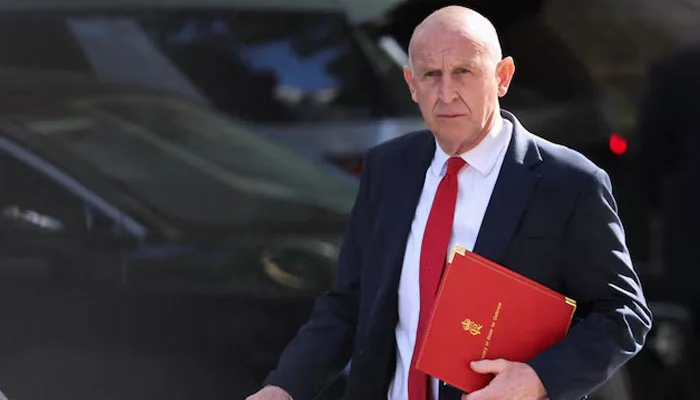
LONDON, June 11 (Alliance News): British Defence Secretary John Healey resigned on Thursday following a bitter dispute over military spending, accusing Prime Minister Keir Starmer of failing to provide the resources needed to safeguard the country amid growing global security threats.
In a strongly worded resignation letter, Healey said the government and the Treasury had failed to commit adequate funding for Britain’s long-delayed Defence Investment Plan (DIP), which is intended to strengthen the armed forces and improve the country’s warfighting readiness.
He warned that the proposed financial settlement would leave the military underprepared at a time when security challenges are increasing across Europe and beyond.
The unexpected resignation represents a significant political setback for Starmer, who is already facing mounting pressure within the governing Labour Party.
Recent resignations from senior ministers and growing calls for leadership change have intensified scrutiny of the prime minister’s position.
Britain’s Defence Investment Plan has been delayed for months as officials from the defence and finance ministries struggled to agree on funding levels.
Military leaders have repeatedly stressed that increased investment is necessary to address rising security concerns, including Russia’s continued military activities and broader geopolitical instability.
In his resignation letter, Healey stated that Starmer had been “unable” and the Treasury had been “unwilling” to provide the resources required to defend the country during a period of heightened threats.
He argued that the latest funding proposal fell far short of what Britain’s armed forces need and would force difficult decisions that could reduce operational readiness and increase risks to military personnel.
Healey further warned that the funding package was heavily backloaded, with substantial increases scheduled for later years rather than addressing immediate defence requirements.
According to reports, he was informed earlier this week that defence spending would rise only modestly over the coming years, a level he considered insufficient to meet the country’s security challenges.
The resignation has also heightened concerns within Britain’s defence industry. Companies involved in military equipment and defence services have expressed frustration over delays to the investment plan, arguing that uncertainty makes it difficult to commit to long-term projects and investments.
The dispute comes at a time when European nations are under increasing pressure to strengthen their military capabilities.
Concerns over Russia’s actions, ongoing instability in the Middle East, and changing United States security priorities have prompted calls for greater defence spending across NATO members.
Despite the resignation, Starmer has indicated that the government intends to publish the Defence Investment Plan before the upcoming NATO summit scheduled for July.
The government maintains that defence spending will continue to rise, but critics argue the pace of investment remains too slow to meet emerging threats.
Political analysts view Healey’s departure as one of the most significant ministerial resignations of Starmer’s premiership and a sign of growing tensions within the government over how to balance national security needs with economic constraints.