 https://twitter.com/home https://www.facebook.com/Shabbir.Hussain191
By Shabbir Hussain
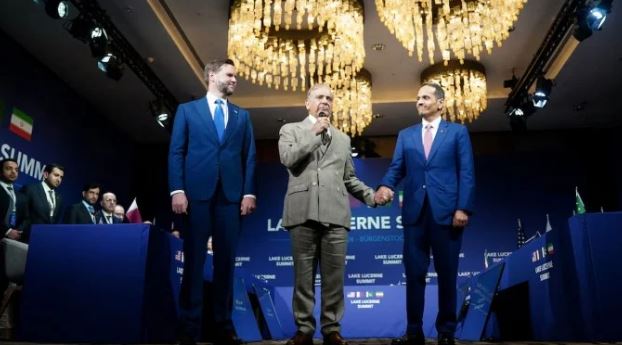
BUERGENSTOCK, Jun 22 (Alliance News): The first round of high-level talks between the United States and Iran in Switzerland concluded with both sides agreeing on a roadmap aimed at reaching a final agreement within 60 days, mediators Pakistan and Qatar said.
The discussions, held at the Swiss mountain resort of Buergenstock, were conducted under the framework of the Islamabad Memorandum of Understanding (MoU), which was facilitated by Pakistan to support diplomatic engagement between Washington and Tehran.
A joint statement issued by Pakistan and Qatar said the two sides agreed on mechanisms to move forward with negotiations, including steps to address regional tensions, ensure safe maritime movement through the Strait of Hormuz, and support efforts to end hostilities in Lebanon.
The technical-level talks will continue throughout the week, with officials working on details related to the implementation of the MoU and remaining areas of disagreement.
The negotiations began amid heightened tensions after Iran announced the closure of the Strait of Hormuz, while US President Donald Trump renewed warnings of possible military action if Iran failed to control its allies in the region.
US Vice President JD Vance led the American delegation, while Iran was represented by a team headed by Parliament Speaker and chief negotiator Mohammad Bagher Ghalibaf, along with Foreign Minister Abbas Araghchi.
According to the mediators’ statement, both sides agreed to continue discussions with the objective of reaching a lasting and mutually acceptable agreement.
The talks also focused on regional security, including the situation in Lebanon, nuclear-related issues, and the implementation of commitments under the Islamabad MoU.
Iranian Foreign Minister Abbas Araghchi said Tehran had secured understandings regarding waivers for oil and petrochemical exports, the release of certain frozen assets, and the launch of a reconstruction and development plan.
The White House did not immediately issue a detailed statement on the conclusion of the first round of talks.
US officials said discussions covered multiple issues, including the Strait of Hormuz, Lebanon, nuclear matters, and mechanisms to implement the memorandum. A US diplomat said both sides continued negotiations despite differences over certain issues.
The Strait of Hormuz, one of the world’s most important energy shipping routes, remained a key focus of discussions. The Islamabad MoU includes provisions aimed at reopening the waterway and preventing disruptions to global energy supplies.
US President Donald Trump earlier warned that Iran would face consequences if it attempted to close the strait again. He also said the agreement was necessary to prevent a wider economic impact caused by rising oil prices.
Following the joint statement from Pakistan and Qatar, global oil prices showed a decline, reflecting cautious optimism among markets over diplomatic progress.
Iran had linked the closure of the Strait of Hormuz to continued violence in Lebanon, arguing that commitments regarding a ceasefire had not been fully implemented. Tehran said it would not discuss substantive issues, including its nuclear programme, unless other parts of the memorandum were addressed.
During the talks, Vice President Vance said progress had been made toward reducing tensions, particularly regarding Lebanon. He described the situation as challenging but said diplomatic efforts were continuing.
Meanwhile, President Trump called on Iran to stop supporting armed groups in Lebanon and warned of stronger action if tensions continued. At the same time, Vance said the US administration wanted to improve relations with the Iranian people and move toward a new phase of engagement.
The Switzerland meeting is being viewed as a significant diplomatic test for the Islamabad MoU and Pakistan’s mediation efforts. Observers believe continued negotiations could play an important role in reducing regional tensions and preventing further escalation.