 https://twitter.com/home https://www.facebook.com/Shabbir.Hussain191
By Shabbir Hussain
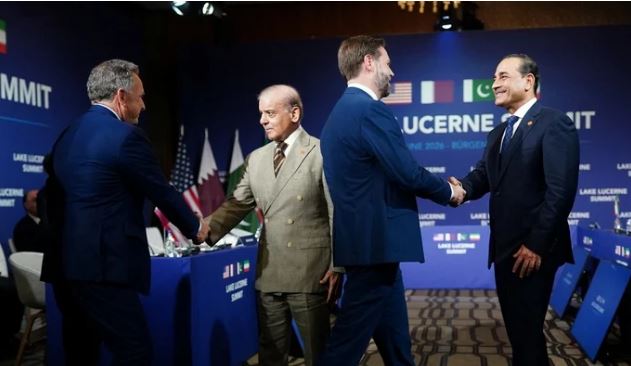
BUERGENSTOCK, Jun 22 (Alliance News): Iran and the United States concluded the first round of talks aimed at ending the Middle East conflict at the Burgenstock resort in Switzerland, with both sides agreeing to continue technical-level negotiations.
The talks, held under the framework of the Islamabad Memorandum of Understanding (MoU), resulted in a roadmap toward a final agreement within 60 days, according to a joint statement issued by mediators Pakistan and Qatar.
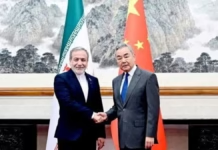
Iranian Foreign Minister Abbas Araghchi described the outcome as “major progress” and appreciated the mediation efforts of Pakistan and Qatar in facilitating the dialogue between Tehran and Washington.
According to the joint statement, the High-Level Committee established by Iran and the United States agreed on a roadmap that would pave the way for further technical discussions on all outstanding issues.
“Technical talks will continue for the remainder of the week at the Burgenstock resort on all issues,” the statement said.
A key development from the talks was the agreement to establish a Lebanon “de-confliction cell” involving the United States, Iran, Lebanon, and mediators Pakistan and Qatar. The mechanism aims to ensure compliance with the cessation of military operations in Lebanon and prevent further escalation.
Iranian Foreign Minister Abbas Araghchi called the Lebanon mechanism the “first real test” of the understanding reached during the negotiations.
The discussions also resulted in the establishment of a communication line between Washington and Tehran to prevent incidents and misunderstandings related to maritime activities in the Strait of Hormuz.
The communication mechanism will remain active during the 60-day period covered by the memorandum, under which Iran has committed to making efforts to ensure safe passage for commercial vessels through the strategic waterway.
The Strait of Hormuz has remained a major concern for global energy markets due to its importance as a key route for international oil shipments. Iran had earlier announced restrictions on maritime movement following renewed tensions linked to the conflict in Lebanon.
Iranian Foreign Minister Araghchi also stated that oil and petrochemical exports would receive exemptions, sanctions restrictions would be eased, some frozen assets would be released, and a reconstruction and development plan would be initiated for Iran.
However, the joint statement issued by Pakistan and Qatar did not specifically mention the release of Iranian assets. The United States government has not yet issued a detailed response regarding Araghchi’s comments.
The Islamabad MoU includes commitments related to easing restrictions, addressing economic concerns, and creating conditions for continued diplomatic engagement between the two countries.
Pakistan and Qatar played a central role as mediators throughout the process, with both countries emphasizing their commitment to ensuring that negotiations continue in a constructive environment.
“The mediating parties will continue to do their utmost to ensure that the negotiations continue to be conducted in a constructive atmosphere with the aim of reaching a final deal,” the joint statement said.
Foreign Minister Araghchi praised what he described as the “tireless Pakistani and Qatari mediation” efforts, acknowledging the role of both countries in bringing the two sides to the negotiating table.
The continuation of technical talks is being viewed as a significant step toward reducing tensions and preventing further escalation in the region.
Diplomatic observers believe the next phase of negotiations will be crucial in determining whether the 60-day roadmap can lead to a comprehensive and lasting agreement.