 https://twitter.com/home https://www.facebook.com/Shabbir.Hussain191
By Shabbir Hussain
TEHRAN/BUERGENSTOCK, Jun 22 (Alliance News): Iran announced the closure of the Strait of Hormuz on Saturday over Israeli attacks in Lebanon, creating fresh uncertainty for a fragile US-Iran understanding just as negotiators prepared to resume talks in Switzerland aimed at ending the wider Middle East conflict.
The development came shortly before planned discussions between Washington and Tehran, which were delayed after Israel launched deadly strikes in Lebanon following the killing of four Israeli soldiers during clashes.
Although the United States announced a renewed ceasefire in Lebanon, fighting continued on Saturday, with Israel and Hezbollah accusing each other of violating the truce.
Iran’s central military command said the decision to close the Strait of Hormuz was in response to what it described as a breach of commitments by the United States and continued Israeli violations of the ceasefire in southern Lebanon.
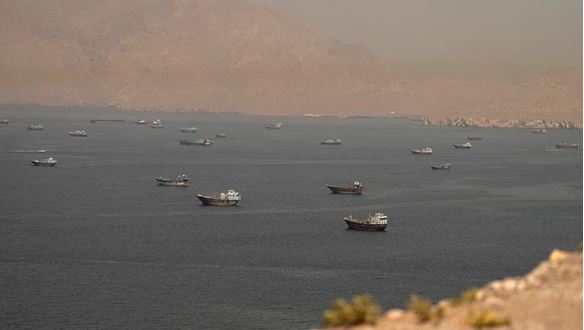
Iran’s Revolutionary Guards naval force warned ships against approaching the strategic waterway, saying their security could be at risk.
The Strait of Hormuz is one of the world’s most important energy routes, carrying a significant portion of global oil and gas shipments. Iran’s earlier restrictions on the waterway during the conflict had caused major concerns in international energy markets.
Under the preliminary agreement reached between US President Donald Trump and Iranian President Masoud Pezeshkian, Tehran had agreed to reopen the strait, and commercial shipping activity had started recovering.
Following Iran’s announcement, US Central Command said safe passage through the international waterway remained intact and that American forces were continuing to monitor the situation.
President Trump later warned that Washington could impose its own charges on the waterway if negotiations failed to produce a final agreement.
Meanwhile, Iranian and US delegations travelled to Switzerland for discussions under the Islamabad Memorandum of Understanding (MoU), with Pakistan and Qatar playing key mediation roles.
Iran’s delegation, led by Parliament Speaker Mohammad Bagher Ghalibaf and Foreign Minister Abbas Araghchi, arrived in Switzerland, while US Vice President JD Vance also travelled to join the negotiations.
Before departing, Vance said the talks would focus on two major issues: progress on the nuclear matter and maintaining the Lebanon ceasefire.
Mediator Pakistan said technical-level talks were scheduled in Burgenstock, Switzerland, with Pakistani and Qatari representatives joining US and Iranian officials.
The negotiations are expected to open a two-month process aimed at resolving outstanding issues, including Iran’s nuclear programme and other commitments under the initial agreement.
Switzerland’s Foreign Ministry confirmed that international efforts were continuing to maintain dialogue but did not provide further details.
Meanwhile, tensions continued in Lebanon despite the ceasefire efforts. Israel and Hezbollah exchanged accusations after renewed clashes in southern Lebanon.
The Israeli military said one of its soldiers was killed, marking the fifth Israeli military death since the US-Iran agreement was reached. Israeli officials said their forces were responding defensively after Hezbollah attacks.
Hezbollah accused Israel of violating the ceasefire by conducting military operations in southern Lebanon and said it had responded to Israeli actions.
Lebanese authorities reported Israeli airstrikes in several areas, with dozens of casualties reported. Lebanon’s Health Ministry said the overall death toll from the conflict had crossed 4,000.
Hezbollah lawmaker Hassan Fadlallah said the group retained the right to respond to attacks, while Israel’s ambassador to the United States, Yechiel Leiter, said Israel was acting in self-defence against militant threats.
The latest developments have increased pressure on diplomatic efforts led by Pakistan and Qatar, with observers saying the success of the Switzerland talks will depend on whether both sides can maintain the ceasefire and implement commitments under the agreement.