
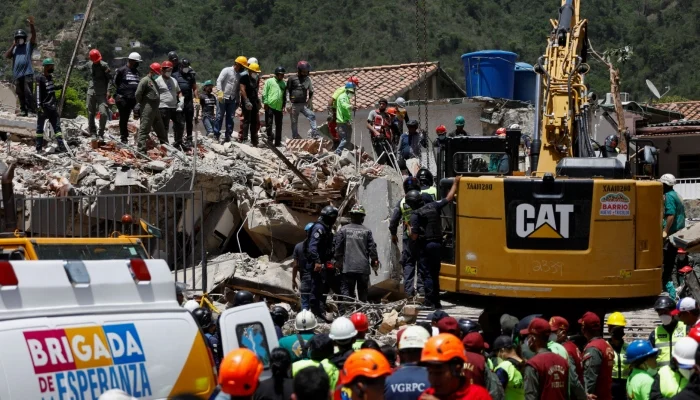
LA GUAIRA/CARACAS, June 27(Alliance News):A massive rescue operation is underway in Venezuela after twin powerful earthquakes devastated parts of Caracas and surrounding regions, leaving hundreds trapped under collapsed buildings and the confirmed death toll approaching 1,000.
The earthquakes, measuring 7.2 and 7.5 magnitude, struck around 160 kilometres west of Caracas, causing widespread destruction across coastal and urban areas.
Authorities said at least 920 people have been confirmed dead, while more than 3,300 others have been injured. Hundreds remain missing, with tens of thousands of reports registered through an official missing-person platform.
The United States Geological Survey (USGS) warned that the final death toll could exceed 10,000, potentially making the disaster one of the deadliest earthquakes in Latin America in the past century.
La Guaira, a coastal city near Caracas, suffered the worst destruction, where dozens of buildings, including high-rise residential complexes, collapsed into piles of concrete and twisted metal.
Residents described desperate scenes as families searched through rubble with their bare hands while waiting for cranes and heavy rescue equipment.
Jennifer Palacios, a 25-year-old resident, said her six-year-old son and five relatives were buried when a housing complex collapsed after the earthquake.
“It is the community that has managed to get people out alive. We need cranes to move the concrete slabs. There are still people trapped,” she said.
Rescue workers faced major challenges due to damaged roads, limited equipment, and shortages of emergency resources. Several areas reported delays in receiving assistance, with residents and volunteers leading early rescue efforts using motorcycles, basic tools, and personal equipment.
Venezuela’s interim government led by President Delcy Rodriguez announced a large-scale emergency response, including military deployment in heavily affected areas. Authorities said thousands of tons of food and relief supplies had been distributed.
However, some families criticised the slow arrival of official assistance, saying bodies and survivors remained trapped under collapsed structures.
International support began arriving as rescue teams from several countries joined the search operation. India, Switzerland, Mexico, Spain, Colombia, El Salvador, and the Dominican Republic sent rescue personnel, medical teams, equipment, and sniffer dogs.
Mexico deployed hundreds of military rescue personnel, while El Salvador’s search teams used drones, thermal scanners, and trained dogs to locate survivors beneath destroyed buildings.
Dr Roberto Gavidia, head of the Salvadoran rescue team, said residents reported hearing voices and receiving phone calls from people trapped under the debris.
“People have told us they can hear people. They call them on the phone and they answer, and they can hear people screaming and calling,” he said.
The United States announced emergency assistance and additional support for rescue operations, including military resources to assist with search and relief efforts.
The disaster struck a country already facing years of economic hardship, political instability, and weakened infrastructure. Millions of Venezuelans are now at risk of displacement, with the United Nations warning that nearly seven million people could be affected.
Survivors described losing homes and livelihoods within minutes.
“My building is uninhabitable and now I have nothing. It’s just me and my son,” said Suhayl Sarquiz, a resident affected by the disaster.
Despite the scale of destruction, Venezuela’s energy sector appeared to avoid major damage, with officials reporting that key oil facilities remained operational.
The earthquake has become the deadliest natural disaster in Venezuela’s modern history since the 1967 Caracas earthquake, which killed around 240 people.


