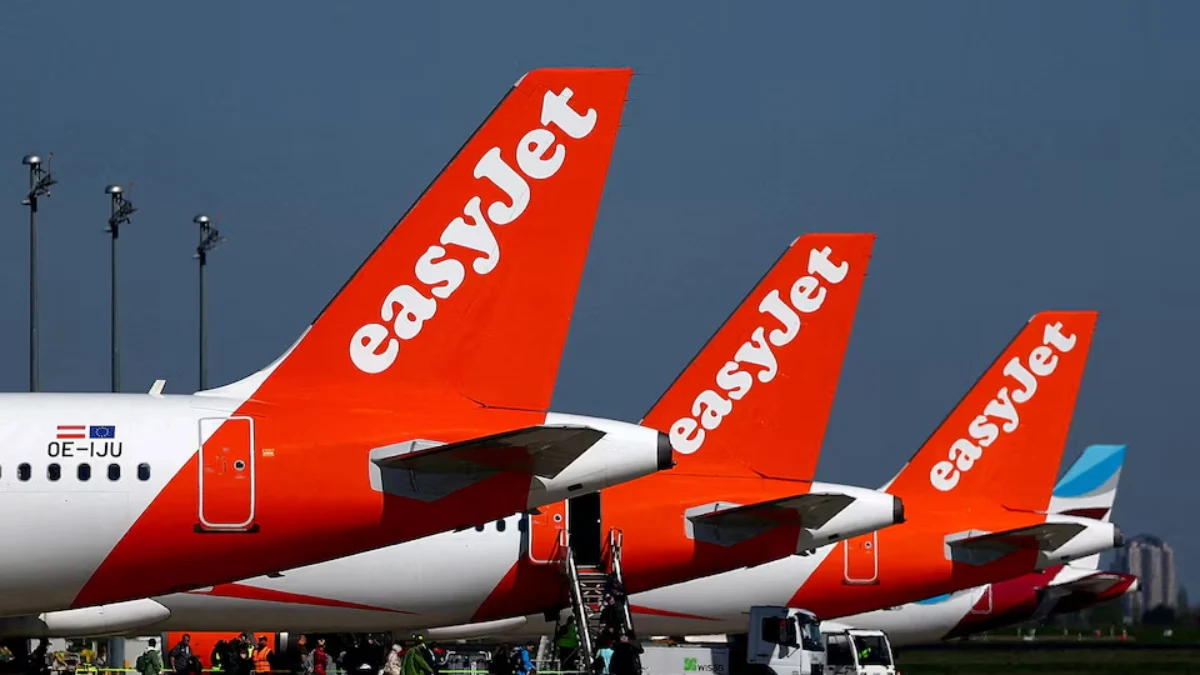
LONDON, July 16 (Alliance News): The renewed conflict involving Iran has intensified financial pressure on Europe’s airline industry, with rising fuel costs and continued geopolitical uncertainty raising fears of consolidation, restructurings and possible bankruptcies among financially weaker carriers.
Industry executives, investors and analysts say the surge in oil prices triggered by the Gulf conflict has exposed fragile balance sheets across parts of the European aviation sector, despite many airlines rebuilding their finances after the COVID-19 pandemic.
British low-cost carrier easyJet is reportedly nearing a US-led takeover that could take the airline private at a valuation well below its pre-pandemic peak. Meanwhile, Latvia’s airBaltic is seeking short-term financing to avoid default, while Norway’s Norse Atlantic has launched a strategic review of its business.
Financial advisory firm Interpath said it is currently working with several major European airlines on restructuring plans.
“We are pitching, I think, four or five very large airlines on restructuring situations just at the moment across Europe,” said Barema Bocoum, head of EMEA at Interpath.
The global airline industry last month almost halved its profit forecast for 2026, citing the impact of the Middle East conflict, which has pushed up fuel prices, disrupted key international air routes and increased operating costs across the sector.
Analysts say the prolonged Iran conflict has added to financial pressures that have persisted since the pandemic, making it increasingly difficult for smaller airlines to remain profitable.
“It feels as though the cycle is over almost before it began,” said UK-based aviation analyst Rob Morris.
The challenging environment has also prompted airlines to slow expansion plans. Aircraft manufacturer Airbus recently lowered its 20-year global passenger aircraft demand forecast, citing geopolitical tensions and slowing global trade.
Aviation adviser Bertrand Grabowski said most airlines in Europe, the United States and Southeast Asia are adopting cautious growth strategies, with only a few exceptions such as Turkish Airlines.
Jet fuel, which can account for more than one-third of an airline’s operating costs during periods of high oil prices, remains a major concern despite some recent price stabilization.
Analysts warn that the crucial summer travel season may provide only temporary financial relief, with many weaker airlines expected to face cash flow pressures during the winter months when passenger demand traditionally declines.
“The smaller airlines are probably the ones in danger,” said London-based aviation analyst James Halstead, noting that airlines often face their greatest financial challenges early in the year.
Among the airlines under close market scrutiny are Poland’s LOT, long viewed as a potential consolidation target, and airBaltic, whose bond yields have risen sharply this year, reflecting growing investor concerns. Norse Atlantic’s share price has also fallen dramatically since its stock market debut in 2021.
Industry observers note that the aviation sector has repeatedly demonstrated resilience during previous crises. However, analysts are closely monitoring airline capacity plans, aircraft values and bankruptcy filings for signs that the post-pandemic recovery is losing momentum.
In the United States, higher fuel, labour, maintenance and leasing costs have already contributed to the collapse of low-cost carrier Spirit Airlines earlier this year.
Analysts have also identified Hungary-based Wizz Air as a possible takeover target due to concerns over its balance sheet, although the airline maintains it has sufficient liquidity to withstand current market conditions.
Wizz Air Chief Executive Jozsef Varadi recently said he expects more airline bankruptcies after the busy summer travel season but believes the company could benefit by acquiring routes from struggling competitors.
International Air Transport Association (IATA) Director General Willie Walsh has also warned that prolonged high fuel prices could force weaker airlines out of the market.
“Unfortunately, I think there will be some carriers that will find this high fuel price very difficult to cope with,” Walsh said.