ISLAMABAD, July 23 (Alliance News): Regional tensions escalated further on Thursday as Yemen’s Houthi movement claimed attacks on Saudi oil tankers in the Red Sea while the United States carried out its 12th consecutive night of airstrikes against Iranian military targets.
According to international media reports, the Houthis said they launched missile and drone attacks on two Saudi tankers, Encelia and Layla, after threatening to impose a blockade on Saudi ports along the Red Sea, a key global energy shipping route.
Saudi authorities confirmed that the tanker Encelia had been struck, while the UK Maritime Trade Operations (UKMTO) said a tanker southwest of Al Shuqaiq was hit by an unidentified projectile, triggering a fire that the crew managed to combat.
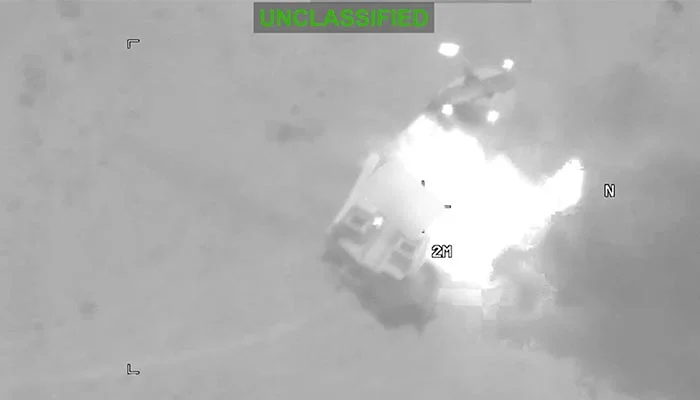
The latest developments come as the conflict between the United States and Iran continues to intensify, with Washington launching fresh strikes on Iranian military infrastructure for the 12th straight night. The US Central Command (CENTCOM) said the operation targeted facilities linked to threats against commercial shipping in regional waters.
Iranian state media reported missile strikes near Bushehr, home to the country’s only civilian nuclear power plant, while air defence systems were activated in several areas.
Iran’s Revolutionary Guards claimed they had stopped three oil tankers attempting to transit the Strait of Hormuz, warning that vessels passing without Tehran’s coordination would face consequences.
US President Donald Trump warned that any Iranian attack on commercial shipping in the Strait of Hormuz would be met with strikes on Iranian civilian infrastructure, including bridges and power plants.
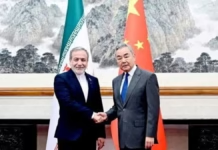
Responding to the warning, Iranian Foreign Minister Abbas Araghchi said Tehran’s policy remained “eye for an eye,” vowing reciprocal action against any attacks on Iranian infrastructure.
The conflict has also spread across the Gulf region. Kuwait said its air defence systems intercepted multiple drone threats, while Jordan reported shooting down four missiles and four drones. Air raid sirens also sounded in Bahrain.
The prolonged conflict has significantly impacted global energy markets. Brent crude briefly climbed above $95 per barrel, reflecting growing concerns over disruptions to oil supplies through the Strait of Hormuz and the Red Sea, two of the world’s most strategic maritime trade routes.
According to US Defence Secretary Pete Hegseth, the military campaign has now cost the United States approximately $37.5 billion, increasing political pressure on the US administration as the conflict enters its fifth month.