Proposed surcharge on Strait of Hormuz shipping raises concerns over international law, global trade and energy prices
By Shabbir Hussain
ISLAMABAD, July 14 (Alliance News): US President Donald Trump’s proposal to impose a 20% charge on cargo passing through the Strait of Hormuz has triggered fresh debate over its legality under international maritime law, while raising concerns about higher global oil prices and shipping costs.
The proposal follows the collapse of a ceasefire between the United States and Iran, with tensions escalating over control of the strategically important waterway through which nearly one-fifth of the world’s oil supply passes.
In a social media post on Monday, Trump said the United States would become the “Guardian of the Hormuz Strait” and should be reimbursed through a 20% charge on all cargo transported via the route.
“The USA will be, from this point forward, known as the Guardian of the Hormuz Strait and will be reimbursed at the rate of 20% on all cargo shipped,” Trump wrote.
The proposal marks a notable shift from the US position expressed only weeks earlier. On June 25, US Secretary of State Marco Rubio had stated that no country had the right to charge vessels for using international waterways, rejecting Iran’s previous demand to impose fees on ships transiting the strait.
Trump, however, had earlier suggested that tolls could be introduced if negotiations with Iran failed. With the ceasefire now effectively over, he has revived that proposal.
The US president has not explained how such charges would be enforced or under what legal authority Washington could collect payments from international shipping companies.
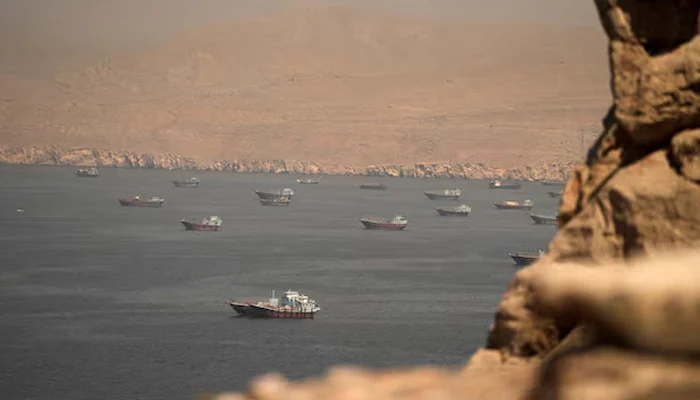
The Strait of Hormuz, located between Iran and Oman, connects the Persian Gulf with the Gulf of Oman and the Arabian Sea. It is one of the world’s most strategically significant maritime routes, carrying vast quantities of crude oil, liquefied natural gas and other essential commodities, including fertilisers.
Iran closed the 34-kilometre-wide waterway after the conflict with the United States and Israel intensified earlier this year, disrupting global energy supplies and sending oil prices sharply higher.
Tehran has argued that maintaining control over the strait is essential to its national security and has sought greater authority over commercial shipping in the area.
Iran maintains that a temporary agreement reached last month allowed it to manage safe passage through the waterway for a limited period, while Washington insists the understanding merely required Iran to facilitate navigation without imposing restrictions or charges.
During the conflict, Iran established the Persian Gulf Strait Authority and instructed commercial vessels to coordinate transit through Iranian authorities. Tehran also warned ships against using routes close to Oman’s shoreline without prior approval.
Although Iran has suggested it could eventually introduce transit fees, it has not announced any formal tariff structure.
Legal experts note that under the United Nations Convention on the Law of the Sea (UNCLOS), countries bordering international straits cannot impose charges simply for allowing ships to pass through.
The convention permits only limited fees for specific services such as pilotage, towing or port assistance, provided they are applied equally to all vessels regardless of nationality.
Although neither the United States nor Iran is a party to UNCLOS, its principles are widely recognised as reflecting customary international maritime law, and the Strait of Hormuz is generally regarded as an international waterway.
Shipping analysts say no country in modern history has successfully imposed unilateral transit charges on vessels using an internationally recognised strait solely for passage.
The proposal has raised concerns among Gulf countries, whose economies rely heavily on uninterrupted exports of oil and natural gas through the Strait of Hormuz.
Energy-importing nations are also closely monitoring developments, fearing that additional shipping costs could further increase global oil prices, transportation expenses and inflation.
Oman, which also borders the strait, has continued to advocate freedom of navigation and has issued guidance allowing vessels to transit through its waters without charging additional fees.
Industry experts warn that any attempt to impose a 20% surcharge on cargoes moving through the Strait of Hormuz could significantly increase the cost of global energy supplies and disrupt international trade routes, particularly if shipping companies are forced to reroute vessels or absorb higher operating expenses.