CAIRO/DUBAI/WASHINGTON, July 15 : US President Donald Trump on Tuesday reimposed a naval blockade on Iranian ports and warned that the United States could target Iran’s power plants, bridges and energy infrastructure unless Tehran returns to negotiations.
The latest move marks a significant escalation in tensions after renewed hostilities between Washington and Tehran undermined a fragile truce reached in June.
The US military also announced a fresh round of strikes, saying the operations were aimed at degrading Iranian capabilities used to attack commercial shipping in the Strait of Hormuz.
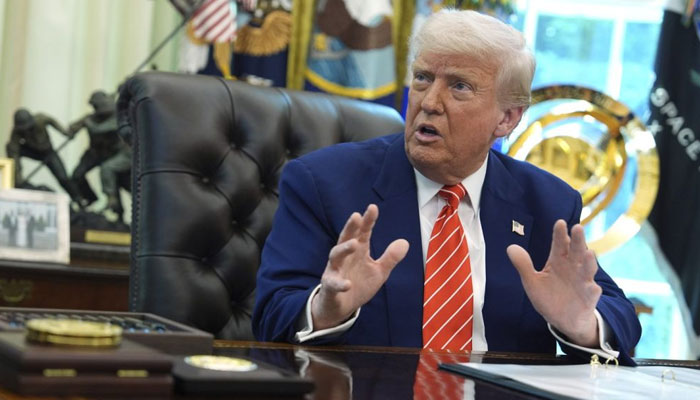
Speaking in an interview with Fox News, President Trump said military action could intensify if diplomatic efforts failed.
“I’ll save the energy targets for last, but ultimately we’ll hit energy targets. Next week comes the power plants, next week comes the bridges, unless they get to the table and negotiate,” he said.
US officials said American negotiators had conveyed a message to Iran urging it to resume talks to avoid further escalation.
Iran, however, rejected the pressure campaign. Deputy Foreign Minister Kazem Gharibabadi said Tehran would not negotiate under military threats or economic coercion.
“If the US thinks that by tightening its measures against us, its military actions and its economic blockade, we will return to negotiations, it is making a mistake,” he told Iranian state television.
Iranian military officials said drone attacks had been launched against US positions at Jordan’s Azraq air base, while the Islamic Revolutionary Guard Corps (IRGC) claimed responsibility for attacks targeting weapons storage facilities in Bahrain and Kuwait.
Kuwait said its air defence systems intercepted Iranian drones, while authorities reported that a fire caused by the attacks had been brought under control.
The United States said Iran had attacked seven commercial vessels in the past week, resulting in nearly a dozen crew members being killed, injured or reported missing.
Earlier, the United Arab Emirates said one Indian crew member was killed and eight others were injured after two Emirati oil tankers were struck by Iranian cruise missiles in the Strait of Hormuz.
The IRGC said it had targeted two “offending” supertankers that allegedly ignored repeated warnings, although it did not identify the vessels.
The renewed conflict has heightened concerns over global energy security. Before the outbreak of hostilities in February, nearly one-fifth of the world’s oil and gas shipments passed through the Strait of Hormuz each day.
The US naval blockade on vessels travelling to and from Iranian ports resumed at 2000 GMT on Tuesday after having been suspended in June. Washington said commercial shipping from other countries would continue to have access to the strategic waterway.
President Trump also withdrew an earlier proposal to impose a 20% transit fee on shipping through the Strait of Hormuz, saying instead that the United States would pursue investment agreements with Gulf countries, although no specific commitments were announced.
Benchmark Brent crude oil has risen about 15% over the past week to around $85 per barrel, reflecting growing market concerns over disruptions to global energy supplies.
The conflict, which began with joint US-Israeli strikes on Iran in February, has expanded across the Gulf region, resulting in thousands of deaths and raising fears of a wider regional war.