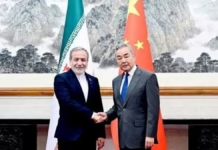
RAWALPINDI, Aug 21 (Alliance News): Syrian Foreign Minister Asaad Hassan Al-Shaibani and his delegation on Friday met with Field Marshal Syed Asim Munir, Chief of Army Staff and Chief of Defence Forces (COAS & CDF), at General Headquarters (GHQ) in Rawalpindi to discuss regional security and ways to strengthen bilateral defence cooperation.
According to the Inter-Services Public Relations (ISPR), the meeting covered matters of mutual interest, the regional security situation and opportunities for expanding cooperation between Pakistan and Syria in the fields of defence and security.
Field Marshal Asim Munir highlighted the longstanding and fraternal relations between Pakistan and Syria and shared Pakistan’s perspective on regional and global peace and stability.
He stressed the importance of closer cooperation and coordinated efforts between the two countries to address common security challenges facing the region.
The Syrian foreign minister appreciated the professional role played by the Pakistan Armed Forces in promoting regional peace and stability.
Both sides reaffirmed their commitment to strengthening bilateral relations and expanding engagement in defence and security-related areas.
Pakistan reaffirms support for Syria
The meeting at GHQ followed a meeting between Prime Minister Shehbaz Sharif and the Syrian foreign minister in Islamabad on Thursday.
During that meeting, the prime minister called for translating the longstanding friendship between Pakistan and Syria into stronger cooperation across several sectors, including politics, defence, trade, investment, education and human resource development.
Shehbaz welcomed Al-Shaibani and his delegation and conveyed his best wishes to Syrian President Ahmad al-Sharaa.
The prime minister also reaffirmed Pakistan’s support for Syria’s sovereignty, unity and territorial integrity.
He said Pakistan would continue to support Syria’s position on the Golan Heights.
The Syrian foreign minister conveyed President Ahmad al-Sharaa’s greetings to the Pakistani prime minister and briefed him on Syria’s political transition and reconstruction efforts.
Focus on stronger people-to-people ties
The two countries are also seeking to improve people-to-people contacts.
Shehbaz Sharif said the resumption of direct flights between Pakistan and Syria would help strengthen bilateral relations and facilitate Pakistani pilgrims travelling to Syria for religious visits.
The prime minister also invited President Ahmad al-Sharaa to undertake an official visit to Pakistan at a mutually convenient date.
The invitation reflects Islamabad’s efforts to deepen relations with Syria as the country undergoes political and reconstruction challenges.
Regional security concerns
Security cooperation remains an important area of engagement between Islamabad and Damascus as both countries face a changing regional security environment.
The latest meeting provided an opportunity for the two sides to exchange views on regional developments and discuss possible areas of cooperation between their defence institutions.
Pakistan has repeatedly emphasised the importance of regional stability, sovereignty and peaceful resolution of disputes.
The Syrian side, meanwhile, has been seeking greater international and regional engagement as Damascus works through its political transition and reconstruction process.
The visit by Al-Shaibani is therefore being viewed as part of broader efforts to strengthen diplomatic, political and security ties between Pakistan and Syria.
Pakistan condemns attack on Syrian military facility
The Syrian foreign minister’s visit also comes after Pakistan strongly condemned an attack by Israeli forces on Abu al-Duhur Airbase in Idlib, Syria.
Islamabad has consistently reiterated its support for Syria’s sovereignty and territorial integrity and has opposed actions that it says threaten regional peace and stability.
The latest discussions between the Pakistani military leadership and the Syrian foreign minister are expected to provide further momentum to bilateral defence and security engagement.
Both sides reiterated their resolve to strengthen bilateral ties and maintain closer consultations on regional and international security developments.