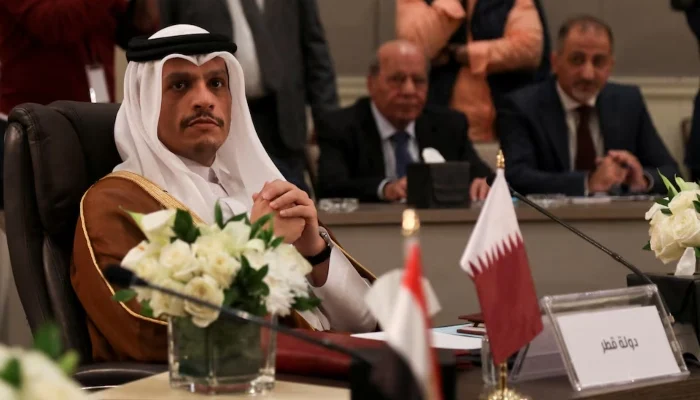
DOHA, Aug 27 (Alliance News): Qatar’s Prime Minister and Foreign Minister Sheikh Mohammed bin Abdulrahman Al-Thani is set to visit Tehran on Thursday in a fresh effort to revive diplomatic engagement between the United States and Iran amid a prolonged standoff over the Strait of Hormuz.
Qatar, a close US ally and neighbour of Iran, has played a key role as a back-channel mediator between the two sides and helped secure a ceasefire in June that temporarily halted hostilities.
The visit comes as the conflict approaches its sixth month, with military operations largely paused but diplomatic efforts yet to produce a breakthrough.
Qatar’s Foreign Ministry said Sheikh Mohammed would discuss the continuation of mediation efforts, freedom of navigation through the Strait of Hormuz and measures needed to reduce regional tensions and create conditions for renewed dialogue.
Iran’s Foreign Ministry spokesperson Esmaeil Baghaei confirmed the Qatari prime minister’s visit and said regional developments and mediation efforts would also be discussed.
The Strait of Hormuz remains a major obstacle in negotiations. The strategic waterway carried around 20 million barrels of oil per day before the conflict, representing about one-fifth of global oil supplies.
Oil flows through the strait have since dropped sharply, with around 5 million barrels per day transiting on Monday, according to ship-tracking data.
Iran has maintained control over the waterway as a key source of leverage in its confrontation with Washington. Tehran has also sought arrangements under which ships would pay a commission for passage, a proposal opposed by the United States.
Iran-Oman talks continue
Iran and Oman have held weeks of discussions over the management of shipping through the Strait of Hormuz.
Iran’s Revolutionary Guards said on Wednesday that the two countries had reached an understanding on sharing control of the waterway and its revenues.
However, a senior Iranian source told Reuters that an agreement had not yet been finalised, with negotiations continuing over its details.
The conflicting statements came as Iran maintained that the strait would remain closed unless Washington met its conditions under a June memorandum of understanding.
Those conditions reportedly include an end to the US blockade of Iranian ports, compensation and the removal of sanctions.
Qatar’s visit is therefore expected to focus partly on finding a diplomatic formula that could restore freedom of navigation and reduce tensions surrounding the strategically important waterway.
Maritime security concerns
The International Maritime Organization has reported 70 incidents in the Strait of Hormuz since February 28, resulting in the deaths of 19 seafarers.
The conflict has also severely affected regional energy shipments and raised concerns about the security of commercial vessels travelling through the Gulf.
Although fighting has largely subsided, Iran retains missile and drone capabilities that could threaten Gulf states hosting US military bases and commercial shipping in the region.
The US military’s Central Command has not reported an attack on Iran for nearly a month, while Washington has increasingly relied on economic pressure and sanctions.
Qatar’s diplomatic initiative comes against this backdrop, with Doha seeking to bridge differences between Washington and Tehran and create conditions for a broader political settlement.