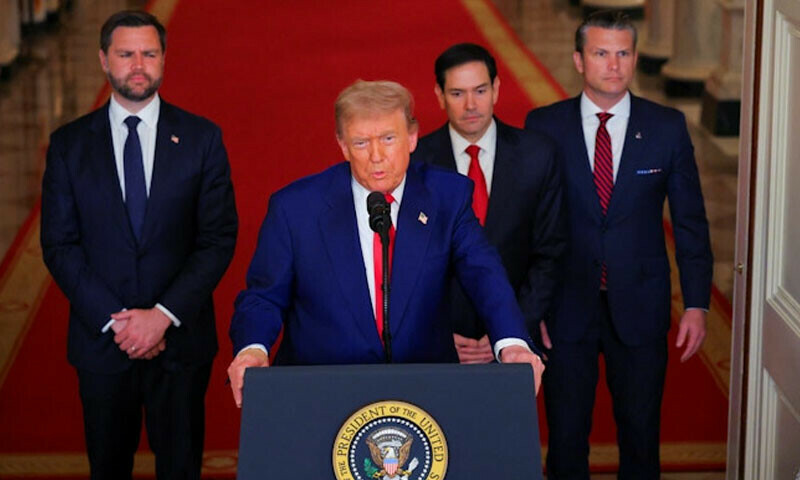
WASHINGTON, Jan 31 (Alliance News): President Donald Trump said on Friday that Iran is likely to negotiate a deal rather than face potential US military action, despite Tehran’s insistence that its missile and defensive capabilities will never be part of negotiations.
Speaking to reporters in the Oval Office, Trump confirmed that he had given Iran a deadline to enter talks on its nuclear and missile programmes but declined to reveal specifics.
He highlighted the deployment of a large US naval flotilla toward Iranian waters, stating, “Hopefully we’ll make a deal. If we do, that’s good. If we don’t, we’ll see what happens.”
Trump cited what he described as Iran’s decision to halt executions of protesters, amid widespread domestic unrest, as a sign that Tehran may be ready for diplomatic engagement.
Rights groups, however, estimate more than 6,000 deaths occurred during Iran’s crackdown on nationwide protests.
US allies in the Gulf have expressed concern that any strike on Iran could destabilize the region and trigger economic chaos. A senior Gulf official, speaking on condition of anonymity, noted that Washington’s plans remain closely guarded but emphasized hopes for a peaceful resolution.
Meanwhile, Iranian officials have reinforced their stance that missile and defensive programs remain non-negotiable. Ali Larijani, secretary of the Supreme National Security Council, met with Russian President Vladimir Putin in Moscow, with Russia offering to mediate between Tehran and Washington.
Larijani warned that under an Iranian parliamentary resolution, armed forces of countries participating in recent EU measures against the IRGC could themselves be considered terrorist organizations.
Foreign Minister Abbas Araghchi stated that Iran is open to negotiations but only on an equal footing, reiterating that defensive capabilities will not be compromised. He confirmed there are currently no plans to meet directly with US officials.
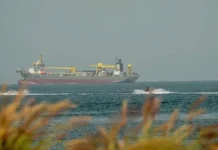
The US Central Command (Centcom) issued a statement urging Iran to conduct a two-day live-fire naval exercise in the Strait of Hormuz safely and professionally. Centcom warned that unsafe actions could increase the risk of collisions, escalation, and destabilization in a critical international trade corridor where roughly 100 merchant vessels pass daily.
Nobel laureate and former IAEA Director General Mohamed ElBaradei condemned the escalating US threats, drawing parallels to the 2003 invasion of Iraq.
He described unilateral military pressure on Iran as “illegal and immoral,” warning that human life and regional stability appear to be disregarded.
Analysts, including Serhan Afacan of the Centre for Iranian Studies in Ankara, note that linking a nuclear deal to Iran’s ballistic missile programme is highly unlikely, as the missile programme is central to Tehran’s defense strategy.
Iran has also warned of immediate retaliatory strikes against US bases, ships, and allies, particularly Israel, if attacked.
Turkish Foreign Minister Hakan Fidan, speaking alongside Araghchi in Istanbul, cautioned that Israel is pushing for US military action against Iran and urged Washington to avoid escalation.
Iran continues to blame the United States and Israel for igniting violent protests in December and early January, which began as peaceful demonstrations over economic grievances.
The tense standoff underscores the fragile balance in the Middle East, with Washington deploying military assets near Iran while seeking to negotiate limits on Tehran’s nuclear and missile programmes. Both sides indicate that diplomacy remains possible, though each maintains red lines that could trigger broader conflict.