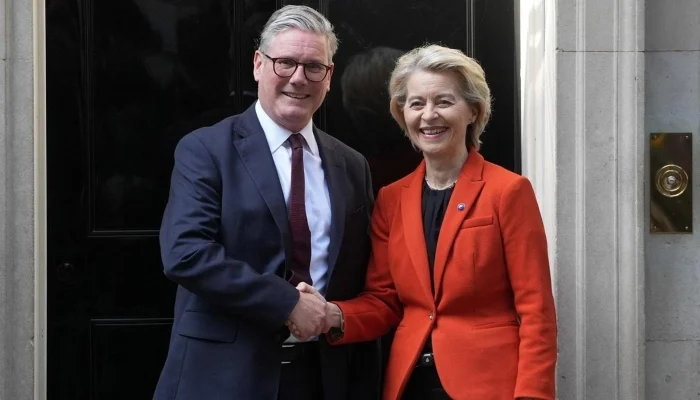
LONDON, May 19 (Alliance News): UK Prime Minister Keir Starmer was set to finalize a deal for closer ties with the European Union at a landmark summit on Monday, opening a new chapter after Britain’s acrimonious exit from the bloc five years ago.
EU diplomats confirmed that a deal had been reached following late-night talks aimed at resolving differences on key sticking points.
EU member states approved three texts for signing, focusing on defence cooperation and, after a last-minute breakthrough, the contentious issue of fishing rights.
Starmer has championed closer UK ties with European neighbours, arguing that the EU deal negotiated by the previous Conservative government “isn’t working for anyone.”
Since taking office in last July’s elections, Starmer has maintained several red lines he will not cross.
Despite progress, some EU demands remain unresolved, and the Conservatives have criticised the reset as a “surrender.”
A source close to the talks told AFP there was a “late breakthrough last night (and) still steps to take.”
The UK and EU leaders — including Ursula von der Leyen, Antonio Costa, and Kaja Kallas — are expected to sign the “Security and Defence Partnership,” the summit’s highlight.
Two other documents are anticipated: a joint statement of European solidarity and a Common Understanding covering trade, fishing, and youth mobility.
Under the deal, Britain will keep its waters open to European fishermen for 12 years after the current 2026 expiry, while the EU will ease red tape on UK food imports indefinitely.
Regarding youth mobility, negotiators agreed on general wording, postponing detailed discussions.
This remains a sensitive issue, with London cautious that any youth mobility scheme might imply a return to freedom of movement between the UK and EU.
The talks come amid heightened security concerns over Russia’s threat and fears that under former US President Donald Trump, American protection of Europe might wane.
The defence partnership aims to increase security talks, allow possible UK involvement in EU military missions, and enable access to a €150 billion EU defence fund, though details are pending.
Britain already has close defence ties with 23 EU countries through NATO, making this pact the easiest part of the deal.
Olivia O’Sullivan of Chatham House described the agreement as “the next step in closer cooperation” but cautioned that many questions remain.
Starmer has ruled out rejoining the EU customs union or single market but appears willing to align with the EU on food and agricultural standards.
Europe Minister Nick Thomas-Symonds emphasized the need to reduce “red tape” that causes delays and food spoilage at borders.
Starmer rejects freedom of movement but is open to a controlled youth mobility scheme for British and European young adults aged 18 to 30 to study and work across borders.
This cautious stance reflects rising support for Nigel Farage’s hard-right, anti-immigration Reform UK party.
Thomas-Symonds said any youth mobility scheme would be “smart and controlled” and that faster customs processing for British nationals at EU borders is also sought.
“We want British people who are going on holiday to be able to enjoy their holiday, not be stuck in queues,” he said.