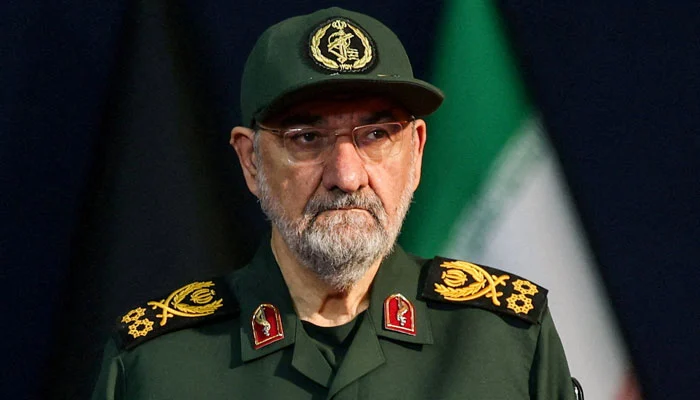
TEHRAN, Aug. 10 (Alliance News): Iran has appointed veteran Revolutionary Guard commander Mohsen Rezaei as Secretary of the Supreme National Security Council (SNSC), placing one of the country’s most influential security figures at the helm of its top decision-making body on national security and foreign policy.
The appointment comes more than five months into Iran’s conflict with the United States and reflects a significant reshuffle within the country’s security establishment.
Rezaei, 71, succeeds Mohammad Baqer Zolqadr, who has been appointed political adviser to Iran’s Supreme Leader, Ayatollah Mojtaba Khamenei. The SNSC, chaired by President Masoud Pezeshkian, is responsible for coordinating Iran’s national security, defence and foreign policy.
Veteran Revolutionary Guard Commander
Mohsen Rezaei joined the Islamic Revolutionary Guard Corps (IRGC) shortly after the 1979 Islamic Revolution and became its commander in 1981 at the age of just 27.
He led the IRGC for 16 years, including most of the 1980–1988 Iran-Iraq War, during which he oversaw the expansion of the force’s ground, naval and air capabilities.
Rezaei belongs to the first generation of Revolutionary Guard commanders who emerged from Iran’s revolutionary movement and later became key figures within the country’s military and political leadership.
Long Political Career
Following his tenure as IRGC commander, Rezaei remained a prominent figure in Iran’s political and security establishment.
He has contested Iran’s presidential elections several times and served as Vice President for Economic Affairs from 2021 to 2023 under the late President Ebrahim Raisi.
Academically, Rezaei holds a doctorate in economics from the University of Tehran.
Close Ally of Supreme Leader
In March, Rezaei was appointed military adviser to Supreme Leader Ayatollah Mojtaba Khamenei, who assumed the country’s highest office following the death of his father, Ayatollah Ali Khamenei, during the early stages of the US-Israel conflict with Iran.
Throughout the conflict, Rezaei emerged as one of Iran’s most outspoken officials, frequently expressing scepticism towards negotiations with Washington and advocating a hardline approach to national security.
He also publicly criticised ceasefire arrangements and accused the United States of undermining efforts to reduce regional tensions, particularly through developments in the Strait of Hormuz.
In announcing his latest appointment, Supreme Leader Mojtaba Khamenei praised Rezaei’s “valuable experience”, highlighting his decades of military leadership and service within Iran’s security institutions.
Revolutionary Background
Before the 1979 Islamic Revolution, Rezaei was actively involved in opposition activities against the rule of Shah Mohammad Reza Pahlavi.
He was arrested by the Shah’s intelligence agency, SAVAK, in 1973 while still a teenager because of his political activism.
Rezaei later helped establish the Mansouroun organisation, one of several underground Islamist groups that opposed the monarchy. Many members of the group later became senior commanders within the Revolutionary Guard following the Islamic Revolution.
His appointment is widely seen as reinforcing the influence of experienced Revolutionary Guard figures at the centre of Iran’s security and strategic decision-making during a period of heightened regional tensions.