
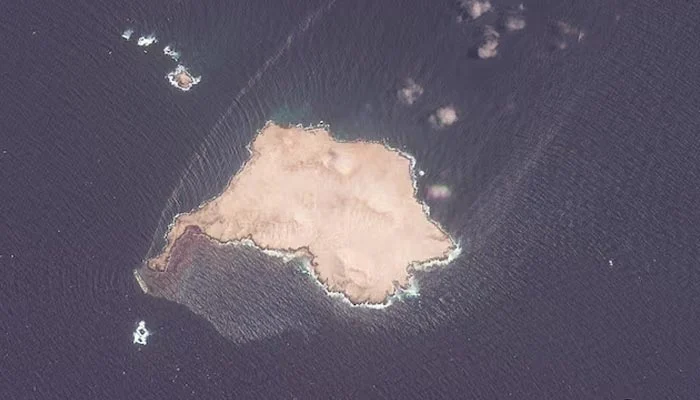
MUSCAT, Aug. 10 (Alliance News): A massive oil spill from a sanctioned tanker carrying Russian crude has spread across approximately 390 square kilometres off the coast of Oman, prompting environmental concerns as authorities work to contain the pollution near the ecologically significant Hallaniyat Islands.
According to Oman’s Environment Authority, the oil slick has expanded northeast of the Hallaniyat Islands in the southern Dhofar Governorate towards the mainland, reaching within an estimated seven kilometres of the coastline.
The spill originated from the Caroline Bezengi, a 274-metre (900-foot) tanker that was carrying Russian crude oil and is under sanctions imposed by the European Union and the United Kingdom.
Maritime security sources said the vessel’s crew first reported difficulties on June 8 while sailing off the southern Yemeni port of Mukalla. Initial assessments indicated that an explosion may have occurred onboard, although the exact cause of the damage remains unknown.
In its first public assessment of the environmental impact, Oman’s Environment Authority said satellite imagery confirmed the oil slick now covers around 390 square kilometres (150 square miles). Authorities said response teams were continuing efforts to monitor and contain the spill to minimise damage to the marine environment.
The Hallaniyat Islands are regarded as one of Oman’s most important marine ecosystems, supporting coral reefs, fisheries, endangered sea turtles and migratory birds, raising concerns that the spill could have significant ecological consequences if it continues to spread.
Satellite imagery analysed by Reuters, together with shipping specialists, indicated that the spill continued expanding through the end of July, increasing fears of long-term environmental damage.
Shipping records show the Caroline Bezengi had loaded Russian crude before beginning its voyage. Public Automatic Identification System (AIS) data indicates the tanker last transmitted its location on June 11 while off the coast of Yemen before disappearing from public tracking systems.
The vessel has been identified as part of Russia’s so-called “shadow fleet” — a network of ageing and often poorly maintained tankers used to transport Russian oil while circumventing Western sanctions imposed following the conflict in Ukraine.
The European Union and the United Kingdom have sanctioned the Caroline Bezengi, alleging that it has been involved in transporting Russian petroleum products in violation of international restrictions.
Environmental experts warn that large-scale marine oil spills can severely damage coastal ecosystems, fisheries, tourism and marine biodiversity, with recovery often taking years depending on the extent of contamination.
Omani authorities have not disclosed the volume of oil released into the sea or confirmed whether any oil has reached the country’s coastline.


