PEREIRA/CALI, Aug 12 (Alliance News): The death toll from Colombia’s devastating 7.4-magnitude earthquake has risen to 254, as rescue teams continue searching through collapsed buildings for survivors while thousands of people remain homeless across the country’s western region.
The powerful earthquake, the strongest to hit Colombia this century, struck early Monday, causing widespread destruction across the coffee-growing region. Apartment buildings, homes, schools and healthcare facilities were severely damaged or completely destroyed.
According to official reports, 101 people were killed in Pereira and 95 in Cali, while casualties were also reported in several other affected areas, bringing the nationwide death toll to 254.
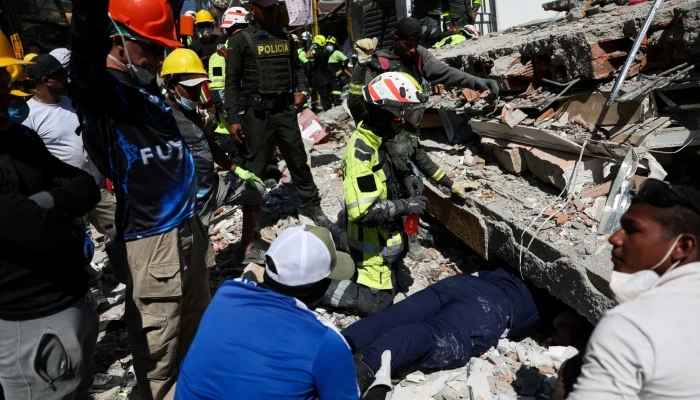
Rescue workers continued operations overnight, using cranes, excavators, search dogs and even their bare hands to locate people trapped beneath the rubble. Nearly 100 aftershocks had been recorded by early Tuesday, complicating rescue efforts and forcing many residents to remain outdoors.
Communities in the Pacific-facing province of Choco, near the earthquake’s epicentre, remain without electricity, clean water and communication services, making emergency operations more difficult.
President Abelardo De La Espriella, who took office only days before the disaster, visited the affected regions and pledged government support for families who lost their homes and livelihoods.
The National Coffee Federation said it was working with local communities to assess damage to farms and rural infrastructure, while emergency teams continued evaluating losses.
Survivors described scenes of panic and destruction as buildings collapsed within seconds. Many residents escaped with only the clothes they were wearing, while others remained trapped beneath the debris.
In Pereira, rescue crews successfully pulled several survivors from collapsed structures, prompting cheers from gathered crowds. However, officials warned that many people were still missing.
Thousands of families have been displaced after residential buildings became unsafe to occupy. Authorities are inspecting damaged structures before allowing residents to return.
The disaster also disrupted critical infrastructure. Six airports were temporarily closed due to structural damage, while dozens of roads were affected. Electricity, water supplies, healthcare services and telecommunications remain disrupted in several regions.
Choco Governor Nubia Cordoba said the full scale of the destruction had yet to be determined, describing the physical damage as “unquantifiable.”
International assistance has begun arriving. The United States announced $15.5 million in emergency humanitarian aid for shelter, food and relief operations, while the Inter-American Development Bank said it had made $50 million available for reconstruction if requested.
United Nations agencies said emergency food supplies were ready for distribution as humanitarian teams expanded operations in the hardest-hit areas.
Authorities warned that the death toll could continue to rise as communications are gradually restored and rescue teams reach isolated communities where the full extent of the devastation remains unknown.