NEW DELHI, May 16 (Alliance News): The BRICS Foreign Ministers’ Meeting concluded without a joint statement after sharp differences emerged between Iran and the United Arab Emirates over the ongoing conflict in the Middle East and allegations related to regional military operations.
According to international media reports, the meeting hosted by India ended inconclusively, prompting the host country to issue a presidential statement instead of the customary joint communiqué, reflecting divisions among member states of the BRICS alliance.
Reports said Iran demanded that the BRICS bloc formally condemn the United States and Israel over the ongoing war involving Tehran, while also accusing the UAE, a close US ally, of direct involvement in military operations against Iran.
The presidential statement issued by India acknowledged differences among member countries regarding developments in West Asia and the broader Middle East region.
The document noted that member states held varying positions on issues including the urgent resolution of the crisis, the role of diplomacy and negotiations, and the importance of respecting sovereignty and territorial integrity.
According to the statement, discussions during the meeting also emphasized adherence to international law, protection of civilian infrastructure, freedom of navigation through international waterways and safeguarding human lives during regional conflicts.
Iranian Foreign Minister Abbas Araqchi, while addressing a press conference after the meeting, indicated that one BRICS member had opposed certain sections of the proposed joint statement.
Without naming the country directly, he said Iran had no disagreement with that state and clarified that it was not among the targets during the current conflict.
Araqchi stated that Iran had only targeted US military bases and installations located in territories linked to its regional adversaries.
In response, the United Arab Emirates strongly rejected the allegations made against it.
In an official statement, the UAE Ministry of Foreign Affairs said the Emirates categorically rejects any accusation or threat affecting its sovereignty, national security or independent policy decisions.
The statement further declared that the UAE reserves all sovereign, legal, diplomatic and military rights in response to any threat, claim or hostile action directed against the country.
UAE Deputy Foreign Minister and Representative to the BRICS Summit, Khalifa bin Shaheen Al Marrar, accused Iran of carrying out repeated attacks against the UAE since February 28, 2026.
He alleged that Iran had targeted civilian facilities and critical infrastructure, describing the actions as unnecessary and hostile.
The Emirati official also accused Iran of obstructing international maritime routes, including what he termed the “virtual closure” of the Strait of Hormuz, one of the world’s most strategically important energy shipping corridors.
He emphasized that the UAE neither expects external protection nor seeks dependence on any foreign power regarding its national security.
Diplomatic observers noted that the failure to issue a unified BRICS statement highlights growing internal divisions within the bloc on sensitive geopolitical and security issues.
Analysts believe the disagreements underscore the challenges faced by BRICS members in developing a common foreign policy position despite efforts to expand the group’s global influence.
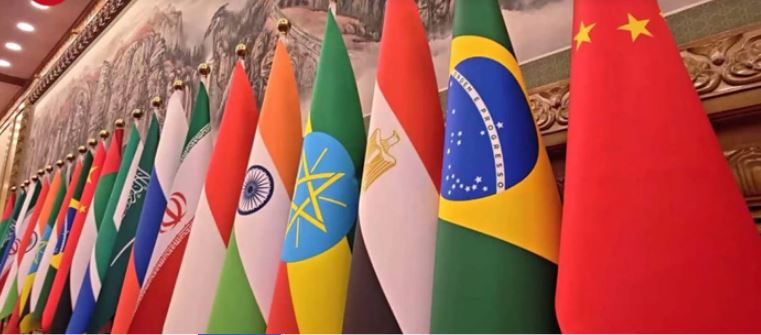
The BRICS alliance, which includes Brazil, Russia, India, China, South Africa and newly admitted member states, has increasingly sought to position itself as a major platform for political and economic cooperation among emerging economies.
However, experts say differing regional interests and security concerns among member countries continue to complicate consensus-building on international conflicts.
The latest divisions emerged at a time of heightened tensions in the Middle East, particularly concerning maritime security, regional military operations and the future stability of global energy supply routes.
Observers noted that despite disagreements, BRICS leaders continue to emphasize the importance of diplomacy, dialogue and multilateral cooperation in addressing global crises.