WASHINGTON, Aug 18 (Alliance News): The White House has sharply criticised CNN reporter Kristen Holmes after she questioned US President Donald Trump about his relationship with executive assistant Natalie Harp, in the latest confrontation between the administration and a female journalist.
The exchange took place during an event at the Oval Office on Monday, where Trump was hosting 16-year-old lifeguard Ryder Williams, who recently saved a child from dangerous ocean swells off Santa Cruz, California.
During the event, Holmes asked Trump about recent comments by Democratic Senator Jon Ossoff concerning Harp, 35, who has attracted increased public attention because of her close proximity to the president.
The White House’s Rapid Response team subsequently criticised Holmes in a post on X, accusing her of using an event honouring a teenage hero to raise what it described as an inappropriate question about a member of Trump’s staff.
“Someday, your children will come across your disgusting and inhumane question,” the account said in a post directed at Holmes, while sharing a video of the exchange.
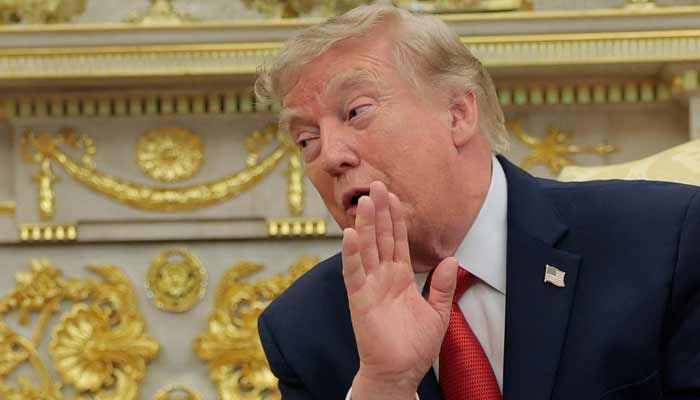
Trump also confronted Holmes directly when she later asked him a question concerning North Korea.
“You’re a loud, boisterous person, you’re fake news, be quiet,” Trump told the reporter.
The president also described Holmes as “very disrespectful” during the exchange.
The confrontation prompted a strong response from CNN, which defended its correspondent and rejected the White House’s criticism.
In a statement, CNN said the attacks against Holmes were “beneath the office” and added that the network stood firmly behind its reporter and rejected the criticism “in the strongest possible terms.”
The latest dispute comes amid growing scrutiny of Trump’s relationship with Harp, a former television news personality who has become a frequent presence around the president.
Harp has attracted attention in recent weeks after reports emerged that she was among the few aides who accompanied Trump during a secret Air Force One aircraft change in July.
Her prominent role in Trump’s inner circle has also generated commentary on social media and in political circles.
Democratic Senator Jon Ossoff, who is viewed as a potential presidential contender for 2028, referred to Harp during a campaign speech on Sunday while criticising Trump’s priorities.
Ossoff accused the president of focusing on the construction of his proposed $400 million White House ballroom and travelling with Harp rather than carrying out his presidential responsibilities.
Trump responded by dismissing Ossoff as a “Pee-wee Herman lookalike” and defending the ballroom project, but did not directly address the senator’s comments about Harp.
The White House, however, subsequently criticised Holmes for raising the issue during the Oval Office event.
The Rapid Response account said Trump had been hosting a “hero lifeguard” when Holmes allegedly used the occasion to take what it called a “cheap shot” at one of the president’s staff members.
The account used highly disparaging language against the reporter, describing critics of the administration as “the lowest of the low.”
Harp has become one of the more recognisable members of Trump’s White House entourage and is frequently seen near the president during public events.
She has reportedly earned the nickname “human printer” because she is often seen providing Trump with printed information and documents.
Her relationship with Trump has also been discussed in the recently published book Regime Change. According to the report, two New York Times journalists wrote that Harp’s loyalty to Trump included sending him highly admiring letters.
The controversy has added to broader concerns over tensions between the Trump administration and journalists covering the White House.
Trump has frequently clashed with reporters whose questions he considers hostile or unfair, while media organisations have defended journalists against what they regard as personal attacks intended to discredit independent reporting.
The White House has also repeatedly used its Rapid Response communications operation to challenge media coverage and criticism of the president and his administration.
White House Communications Director Steven Cheung had earlier attacked Ossoff over his comments about Harp, calling the senator “the biggest loser in politics.”
The latest confrontation between Trump and Holmes is therefore likely to fuel another debate over press freedom, presidential accountability and the increasingly combative relationship between the White House and sections of the US media.