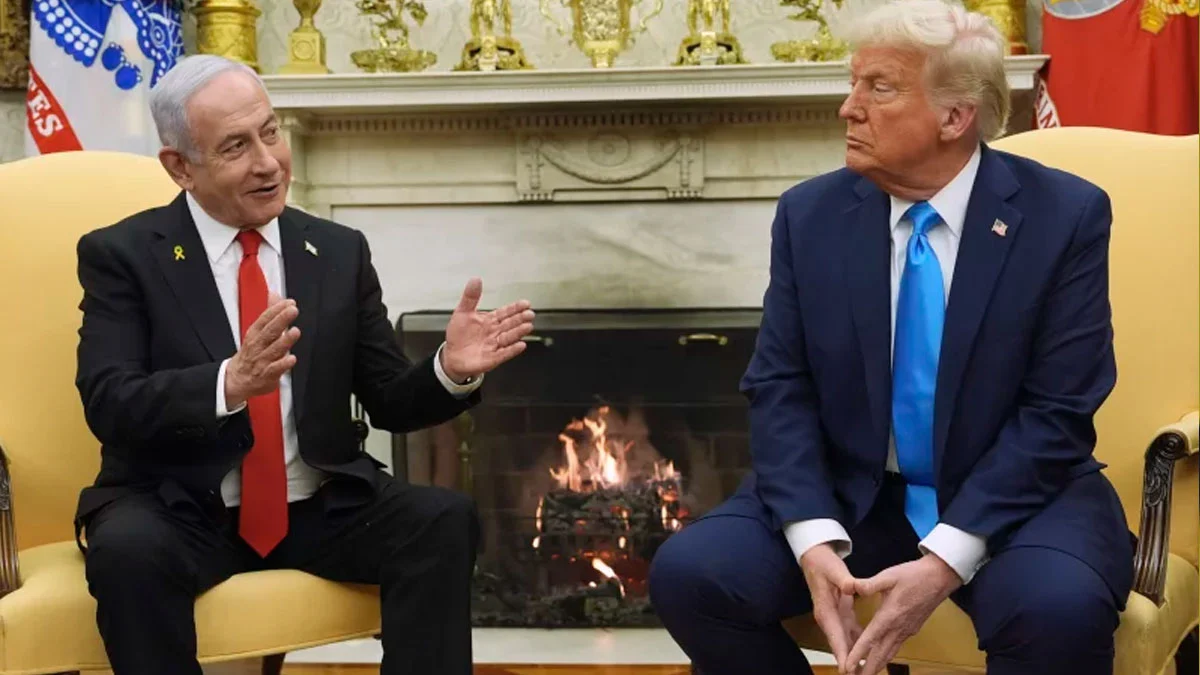
WASHINGTON, July 6 (Alliance News): U.S. President Donald Trump has said Israeli Prime Minister Benjamin Netanyahu “knows who the boss is,” as the two leaders prepare for a meeting in Washington expected to take place in the coming weeks.
In a brief interview with Axios, Trump dismissed suggestions of strained relations with the Israeli leader despite recent reports of disagreements over efforts to end the conflict involving Iran.
“We get along very good. (Netanyahu) knows who the boss is,” Trump said, referring to himself.
Netanyahu’s office confirmed that the two leaders spoke by phone on Friday and agreed to meet “soon” in the United States. While the White House had initially considered hosting Netanyahu as early as next week, Israeli officials indicated the visit is more likely to take place after Trump’s attendance at the NATO Summit in Türkiye on July 7-8.
The meeting comes amid reports of differences between Washington and Tel Aviv over regional security and diplomatic efforts following months of heightened tensions involving Iran.
Although the United States remains Israel’s closest ally, Trump has publicly criticized Netanyahu in recent weeks over Israel’s military actions, which have complicated broader regional peace initiatives.
The two leaders last met at the White House on February 11.
Last month, Netanyahu reiterated his call for Israel to reduce its dependence on U.S. military assistance and strengthen its domestic defense industry.
“I deeply appreciate the support we have received from our American friends, but we need to break free from dependency and build our own independent armaments network,” Netanyahu said while addressing Israeli reserve officers.
Israel currently receives approximately $3.8 billion annually in U.S. military assistance under a long-term agreement signed in 2016, with the package accounting for around 15 percent of Israel’s defense budget.
The upcoming Trump-Netanyahu meeting is expected to focus on regional security, bilateral cooperation, and ongoing developments in the Middle East.